
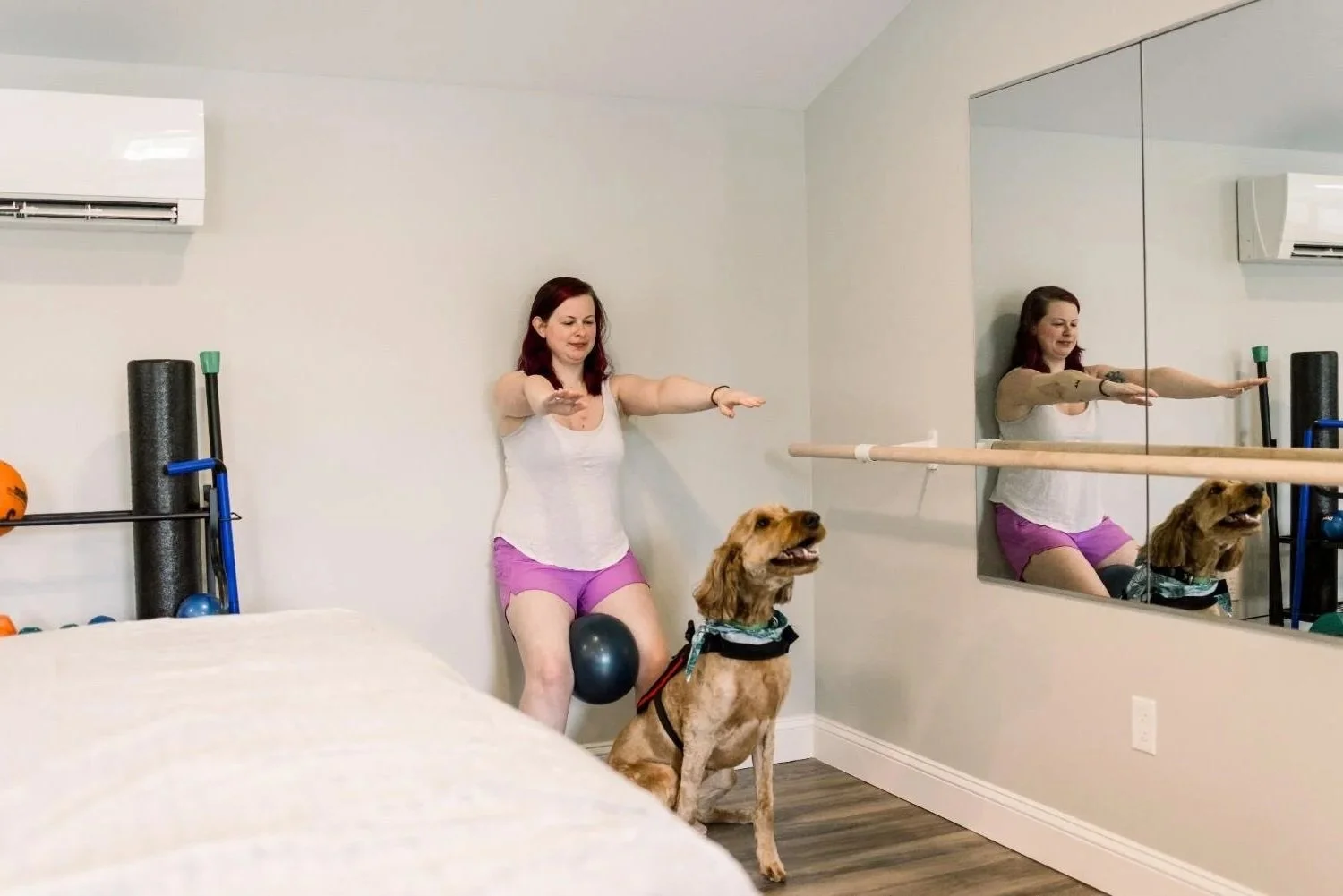
Flometrics® Pelvic Floor
Pelvic floor physical therapy for complex bodies




for adults navigating hypermobility and complex pelvic conditions
Flometrics® Pelvic Floor Physical Therapy
Expert, whole-body pelvic floor physical therapy that understands how connective tissue, pain, and the autonomic system all play a role — not just the pelvic floor in isolation. In person at our Amherst, NH clinic.
You've been told it's "just stress," "just hormones," or to "do more Kegels."
It hasn't worked.
Pelvic pain, urinary urgency, pain with sex, constipation that won't quit, a pelvic floor that's either doing too much or not enough — these are exhausting, and they're often brushed off or treated with one-size-fits-all advice that misses the bigger picture.
For people with hypermobile bodies, the bigger picture matters. The same connective tissue laxity that affects your joints affects your pelvic floor, your bladder, and your gut. Treating the pelvic floor as if it exists on its own is exactly why so many people don't get better.
Flometrics® Pelvic Floor is physical therapy that takes the whole system into account — and takes you seriously.
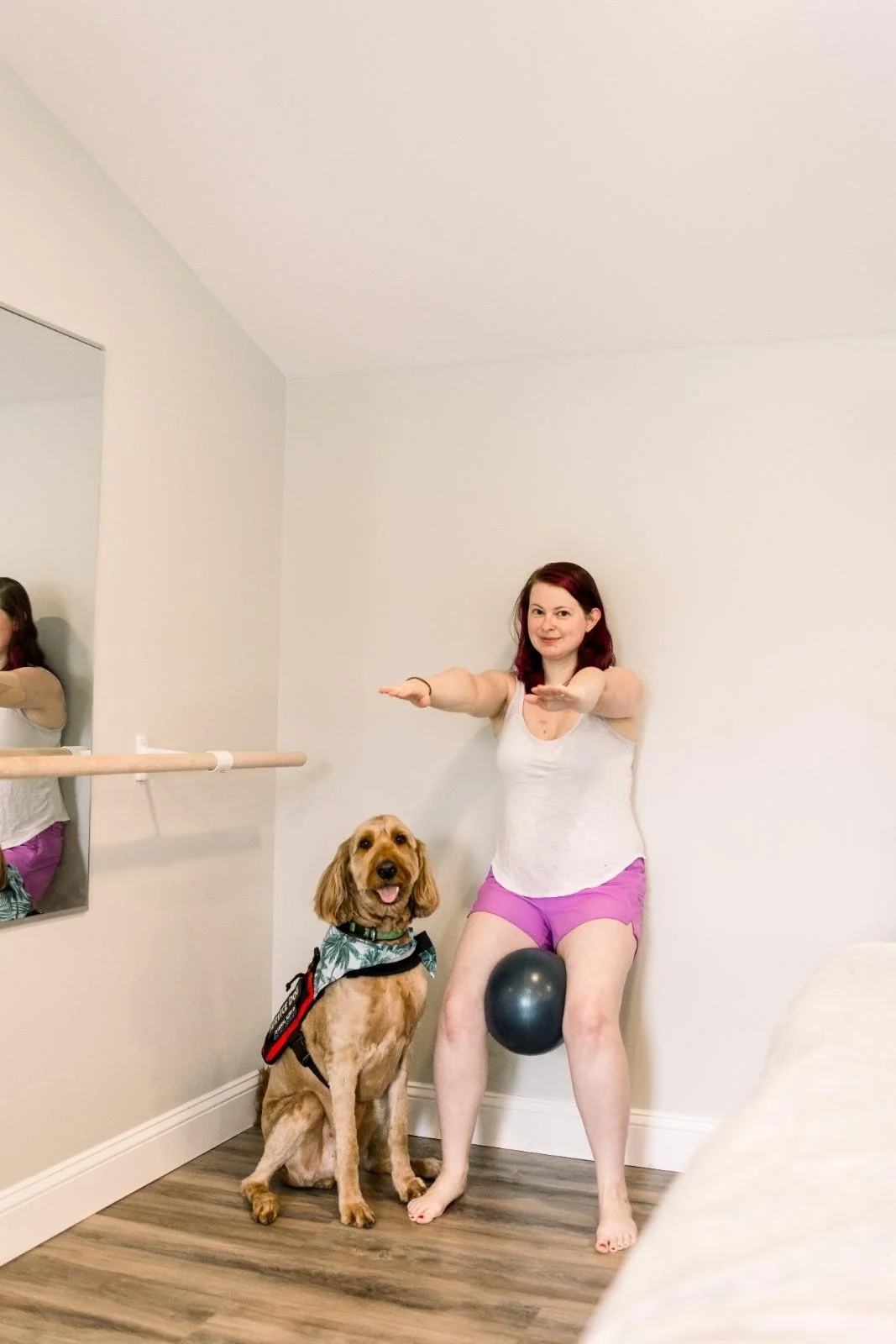
What makes Flometrics® Pelvic different?
Standard pelvic floor therapy often assumes one pattern. Hypermobile and complex bodies don't follow the script.
A lot of pelvic floor work starts from a single assumption — usually that the floor is too tight, or too weak — and treats accordingly. In a hypermobile body, it isn't that simple. Connective tissue laxity can leave the pelvic floor lax and overworking at the same time, guarding to create stability the ligaments can't provide. Hand that body a generic strengthening program and symptoms often get worse, not better.
Flometrics® was built by our co-founder, Dr. Jason Cole, DPT, around the realities of connective tissue — and our pelvic program carries that same lens into the pelvis:
✓ We assess the whole system, not just the floor.
Your pelvic symptoms get evaluated alongside your joint stability, your pain patterns, and the autonomic and GI picture, because in these bodies they're connected.
✓ We don't default to "tighten" or "relax."
We figure out what your pelvic floor is actually doing and build a plan around that — which often means teaching coordination and control rather than brute strength.
✓ We pace for flares and sensitization.
Many of our patients live with central pain sensitization, so we progress in a way that calms the system instead of provoking it.
✓ We teach you the "why," not just the "what."
Understanding the unique reason your body presents the way it does makes your plan click — and when the "what" makes sense, it's far easier to carry out and stick with. That understanding is where lasting outcomes come from.
✓ We go at your pace, always.
Assessment and treatment may include internal techniques, and nothing happens without your informed consent and your control over the pace.
Conditions we commonly help with
We work with adults across a wide range of pelvic concerns, including:
✓ Pelvic floor dysfunction (overactive, underactive, or mixed)
✓ Interstitial cystitis and bladder pain / urgency
✓ Pelvic pain connected to endometriosis, PMDD, and related conditions
✓ Bowel incontinence
✓ Bladder incontinence
✓ Neuralgia
✓ Pain with sex
✓ Antepartum care (body mechanics education, breath training for labor and pressure management, and birth positioning)
✓ Postpartum recovery and pelvic instability
✓ Pelvic organ prolapse and post-operative care if applicable
✓ Constipation and bowel dysfunction linked to pelvic floor coordination
✓ Coccyx and pelvic-girdle instability in hypermobile bodies
Pelvic floor issues aren't only a women's concern
Pelvic floor dysfunction in men is real, common, and badly under-recognized — and it shows up often in hypermobile men, as well as in men whose connective tissue presents as stiff rather than lax. Chronic pelvic pain, tension patterns, urinary and post-void symptoms, bowel dysfunction, sexual concerns, and core-pelvic instability all respond to skilled pelvic floor therapy.
If you're a hyper- or hypomobile man who's been told your symptoms are "in your head" or sent in circles between specialists, we welcome you, and we know how to help.


Who Flometrics® Pelvic is for
This program is for adults 18 and older, of all genders — at any stage and for a wide range of pelvic health needs. Many of our patients are hypermobile or living with Ehlers–Danlos Syndrome and the conditions that come with it — but you do not need hypermobility, or any diagnosis, to benefit.
We also see plenty of patients whose pelvic symptoms come with other complex or chronic conditions. If your situation is complicated and you haven't found care that accounts for all of it, this is built for you.
And you don't need a complex situation — or even active symptoms — to work with us. Whether you're looking for education to get ahead of bowel or bladder issues, preparation and care for birth, or support recovering after a delivery or surgery, we're here to help — with or without EDS.
Your comfort comes first
This is sensitive, personal work, and you stay in control of it the whole way through. You're always welcome to bring a trusted person with you to your sessions for support. Every step is explained in advance, consent is ongoing, and you can pause or stop at any time.
Why patients choose Flometrics® Pelvic
✓ A whole-body approach that connects your pelvic symptoms to the rest of what you're managing
✓ A therapist who understands hypermobility and complex chronic conditions
✓ Care that's paced to avoid flares and calm a sensitized system
✓ Real time and attention — not a rushed, fifteen-minute appointment
✓ A team where most of us have lived this ourselves

MEET your pelvic floor specialist
Amy Kershaw, MPT
Physical Therapist
Amy delivers our pelvic floor Flometrics® program, bringing the protocol's whole-body, connective-tissue lens into pelvic care. She helps adults with complex and hypermobile bodies work through pelvic floor dysfunction, pain, and the concerns that come with them — with skill, patience, and a pace set by the patient.
She comes to this work with more than 20 years as a therapist, treating a wide range of orthopedic and neurological conditions. That care has always been collaborative, built alongside other providers — which is exactly what drew her to Connective Wellness and its team environment. Her pull toward pelvic care grew as she watched patient after patient struggle with conditions they couldn't get treated, or feel unheard when they tried to describe what they were going through. She completed her Herman & Wallace pelvic training two years ago and hasn't looked back. For Amy, good care is manual therapy, movement, and a lot of education — the kind that helps people understand their own bodies and take an active part in their healing.

Pelvic Floor Physical Therapy Intake (New Patient)
A 90-minute pelvic health evaluation with Amy Kershaw, MPT, our hypermobility-aware pelvic PT. Amy reviews your history, movement, and breathing, and with your permission may assess your pelvic floor internally. You’ll leave understanding what’s driving your symptoms, with education and exercises to start.
90 minutes | $445
investment

Pelvic Floor Physical Therapy Follow-up
A 45-minute pelvic floor treatment session tailored to your evaluation and goals. Expect hands-on techniques, education, and home strategies, with exercises paced for your hypermobile body. You’re always in control of what you try and what you don’t.
45 MINUTES | $235
Extended Pelvic Session
A 75-minute pelvic floor session with extra time for treatment, education, and guided practice. Tailored to your evaluation and goals, paced for your hypermobile body, and always guided by your consent and preferences.
75 minutes | $365
All sessions take place in person at our Amherst, NH clinic. Connective Wellness is a direct-pay, out-of-network practice. Many patients use CareCredit or HSA/FSA funds toward care, and we can provide a superbill you can submit to your insurer for possible out-of-network reimbursement. You can learn more about our care model here.
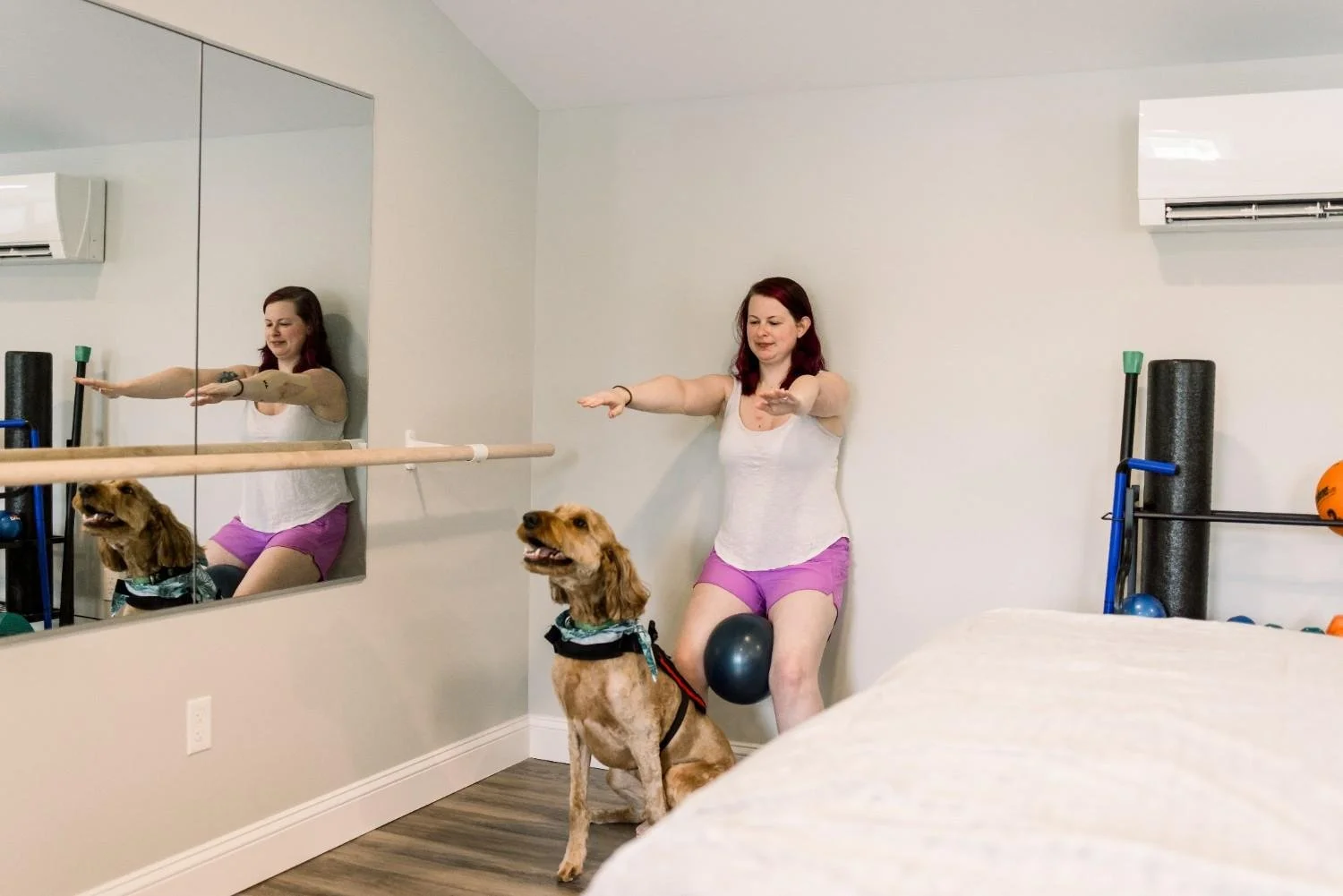
your first 12 weeks
A 12 week plan to strengthen your pelvic floor and manage between visits.
Your evaluation tells us what your pelvic floor is actually doing (too much, too little, or in a lot of hypermobile bodies, both at the same time). The weeks right after it are where things start to change, so Amy designed a package around them.
You’ll see her every week for the first month while you learn the coordination and control your plan is built on. Then every other week for two months. That spacing gives you time to practice at home and come back with real questions, and it gives Amy time to see what’s working before she adjusts anything.
In more than 20 years as a physical therapist, Amy has seen the same thing again and again: patients who come in regularly in the early weeks are the ones who do best (that’s the whole reason this package exists). The research agrees. A 2023 review found that women whose pelvic floor training was supervised ended up with stronger pelvic floor muscles and better quality of life than women who trained on their own. A small 2017 study of men with chronic pelvic pain found that pelvic floor physical therapy reduced symptoms, and that people who stayed with treatment longer tended to see better results.
What you’re working toward is feeling better day to day. Depending on what brought you in, that could mean fewer sprints to the bathroom, a sneeze or a laugh without a leak, sex that doesn’t hurt, or bowel movements that aren’t a daily negotiation (or just getting through a whole movie without thinking about your pelvis once). Every body gets there differently, and Amy will tell you at your evaluation what’s realistic for yours.
By week twelve, the goal is a pelvic floor you understand well enough to manage between visits, with a home program that makes sense to you and a feel for when to push and when to back off.
Book all eight visits up front and your eighth is on us!
EIGHT 45-MINUTE SESSIONS | $1,880 VALUE | only $1,645
The package starts after your Initial Pelvic Evaluation. Ask Amy about it at the end of that visit, or call us with questions before you book.
Frequently asked questions
-
No. If you're dealing with pelvic pain, bladder or bowel symptoms, pain with sex, or postpartum issues, you can start — diagnosis or not.
-
It may. Internal assessment and treatment can be part of pelvic floor PT, and it only ever happens with your informed consent and full control over the pace. We'll always explain options first, and there are external approaches too.
-
Yes. You're welcome to bring a trusted person to your sessions for support.
-
No. We see adults of all genders, and pelvic floor dysfunction is common and treatable in men, including hyper- or hypomobile men.
-
No. New Hampshire is a direct-access state, so you can start physical therapy with us without a doctor's referral.
-
We're a direct-pay, out-of-network practice, so sessions are paid directly rather than billed to insurance. Many patients use HSA/FSA funds, and we can provide a superbill you can submit to your insurer for possible out-of-network reimbursement. This model lets us give you the time complex conditions actually require.

You deserve pelvic care that sees the whole picture
If you've been dismissed, handed a generic plan, or sent between specialists without answers, there's another way to do this — with a team that understands complex bodies and takes your symptoms seriously.
Book your Flometrics® Pelvic intake below, or give us a call. We’ve got you.